
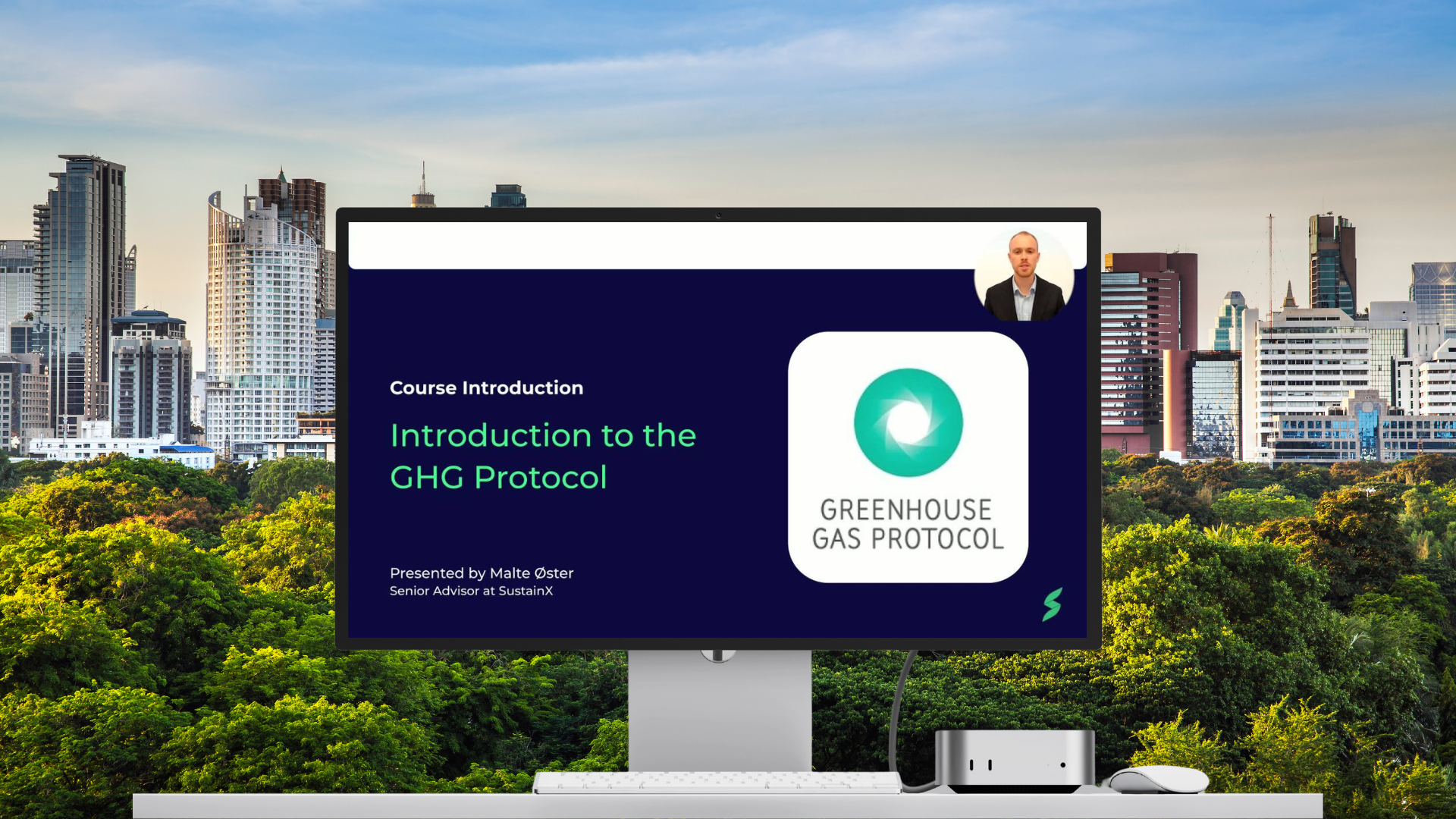
Introduction to the GHG Protocol
A clear, practical introduction to the world’s most widely used greenhouse gas accounting standards, covering Scopes 1, 2 and 3, inventory-building principles, and how measurement connects to reporting and net zero strategies.
Enrolment Options
Emissions Accounting is a Business Essential
Companies face rising expectations from regulators, investors, customers, and internal stakeholders to measure and report greenhouse gas emissions accurately.
Yet many professionals struggle with:
◆ Where to start with GHG accounting and the GHG Protocol
◆ What Scopes 1, 2 and 3 really mean in practice
◆ How to set organisational and operational boundaries correctly
◆ How emissions are calculated (and what data you actually need)
◆ Why Scope 3 is so significant, and how its 15 categories work
◆ How emissions measurement connects to targets, reporting, and net zero plans
This course gives you the clarity and structure to confidently engage with GHG accounting discussions, without getting buried in technical detail.

Learning Outcomes
Build a strong foundation in GHG accounting so you can contribute confidently to climate reporting and decarbonisation decisions.
After this course, you will be able to:

Build Strong Foundations in GHG Accounting
◆ Understand why GHG accounting matters for businesses
◆ Describe the role of the GHG Protocol and its two core standards

Understand Boundaries and Emission Scopes
◆ Apply the five GHG Protocol principles when building an inventory
◆ Set organisational and operational boundaries (Scopes 1, 2, and 3)
◆ Recognise the importance of Scope 3 and its 15 categories

Examine Real-World Reporting Practices
◆ Connect measurement to reporting, targets, and net zero strategies
◆ Apply course concepts to a real-world example of emissions accounting in action.
Course Structure
Format
10 structured lessons
1 hour total completion time
Practical case study application
12 months access
1 CPD credit
Course Outline
Lesson 1: The Global Challenge of Climate Change and the Role of Business - Why emissions accounting matters in today’s economy.
Lesson 2: What is the GHG Protocol? - What it is, who uses it, and why it’s the global default.
Lesson 3: The GHG Protocol’s Standards - An overview of the Protocol’s two core standards and how they’re applied.
Lesson 4: Calculating GHG Emissions - How emissions are calculated and what goes into the process.
Lesson 5: The Five Principles of the GHG Protocol - The principles that guide credible, consistent inventories.
Lesson 6: Organisational Boundaries - How to define what’s “in” and “out” of your inventory.
Lesson 7: Operational Boundaries – Scopes 1, 2, and 3 - How to categorise emissions across the value chain.
Lesson 8: Why Scope 3 Matters - Why Scope 3 is often the biggest share and the hardest to measure.
Lesson 9: The 15 Categories of Scope 3 - A clear breakdown of each category and what it typically includes.
Lesson 10: Reporting, Targets, and Integration - How GHG accounting connects to disclosure, targets, and net zero plans.
Practical Case Study: Starbucks’ GHG Accounting Journey - Apply course concepts to a real-world example of emissions accounting in action.
Designed for Professionals Who Need a Clear, Practical Foundation

Sustainability and Climate Practitioners
◆ Sustainability and ESG professionals
◆ Climate and decarbonisation leads

Finance, Reporting and Governance Teams
◆ Finance and reporting teams supporting emissions disclosures
◆ Strategy, risk and governance professionals

Advisory and Consulting Professionals
◆ Consultants supporting climate accounts and targets

Professionals New to GHG Emissions Accounting
◆ Anyone new to Scopes 1, 2 and 3 and needing a structured introduction
Learn from a Senior Practitioner Bridging Strategy and Real-World Action
Malte Øster is Senior Advisor at SustainX where he helps companies manage emissions, develop sustainability strategies and report on progress.
He works on bridging the gap between sustainability strategy and operational action, supporting companies to:
◆ Measure and manage emissions
◆ Build climate accounts and carbon footprints
◆ Develop sustainability strategies and report progress
◆ Align targets with initiatives like Science Based Targets (SBTi)
Malte has hands-on ESRS experience, guiding listed firms for two years through sustainability statement preparation and auditing under the CSRD. He also contributed to the largest study on the CSRD with WeAreEurope, where he serves on the advisory board.

Malte Øster
Senior Advisor
SustainX
Measurement is the Starting Point for Credible Climate Action
You can’t manage what you can’t measure. GHG accounting underpins:
◆ Investor-focused sustainability disclosures
◆ Net zero planning and transition strategies
◆ Emissions reduction targets (including SBTi)
◆ Internal decision-making and progress tracking
This course helps you understand the “language” of GHG emissions so you can participate confidently in reporting, strategy, and implementation conversations.

Enrolment Options
Course Only
€95
12 months access to:
- Introduction to the GHG Protocol course
- Certificate of Completion
- 1 CPD credits
- Downloadable resources and study materials
Professional Access
€795
12 months access to:
- All Sustainability Reporting Institute courses
- All Sustainability Reporting Institute masterclasses
- All Sustainability Reporting Institute certification pathways
- Expert-led sessions and interactive workshops
- In-depth learning tools, resources and advanced templates
- 60+ CPD credits
- Recognition and career-enhancing credentials
GHG Protocol Course: Frequently Asked Questions
Common questions about our GHG Protocol training, from course access to progression and earning your certification.
How long does the course take?
Approximately 1 hour.
Will I learn how to calculate emissions?
You’ll learn the fundamentals of how GHG emissions are calculated and what inputs are used, plus how to apply core principles and boundaries.
How many CPD credits does it provide?
1 CPD credit.
Is Scope 3 covered?
Yes, the course explains why Scope 3 matters and provides an introduction to all 15 categories.
How much does the course cost?
The course is included in our Professional Membership. Please see the Membership page for current pricing.
Is this suitable for beginners?
Yes. It’s designed to be accessible and practical for those new to the GHG Protocol.
Build a Foundation in GHG Accounting
Understand Scopes 1, 2 and 3, learn how inventories are built, and see how measurement connects to reporting, targets and net zero strategies.
Enrol Today