
VSME Certification Pathway: Level 1
Introduction to the VSME Standard
A clear, practical introduction to the Voluntary Sustainability Reporting Standard for SMEs (VSME), designed to help small and medium-sized enterprises respond to stakeholder data requests and build structured sustainability reporting.
Enrolment Options
SMEs are Increasingly Being Asked for Sustainability Information
Large companies, investors, and business partners are requesting structured sustainability information from SMEs.
Yet many small and medium-sized businesses struggle with:
◆ Understanding what sustainability reporting actually requires
◆ Knowing which stakeholders require which information
◆ Responding to ESG questionnaires from larger companies
◆ Translating sustainability efforts into structured disclosures
◆ Building a simple, proportionate reporting approach
Without a clear framework, sustainability reporting feels complex, time-consuming, and unclear.
Learning Outcomes
Build a structured foundation for sustainability reporting, which is proportionate, practical, and SME-focused.
After this course, you will be able to:

Understand the Foundations of the VSME Framework
◆ Identify the key stakeholders of sustainability reporting
◆ Explain the purpose and objectives of the VSME Standard
◆ Recognise SME classifications under the VSME framework

Navigate the VSME Structure and Disclosures
◆ Understand the structure of the VSME Standard
◆ Differentiate between VSME disclosure requirements
◆ Understand the principles for presenting information

Understand Real-World Reporting Practices
◆ Recognise the difference between the types of preparers
◆ Identify key challenges and opportunities associated with sustainability reporting for SMEs
Course Structure
Format
9 focused lessons
1 hour total completion time
Practical case study review
Free access via membership
1 CPD credit
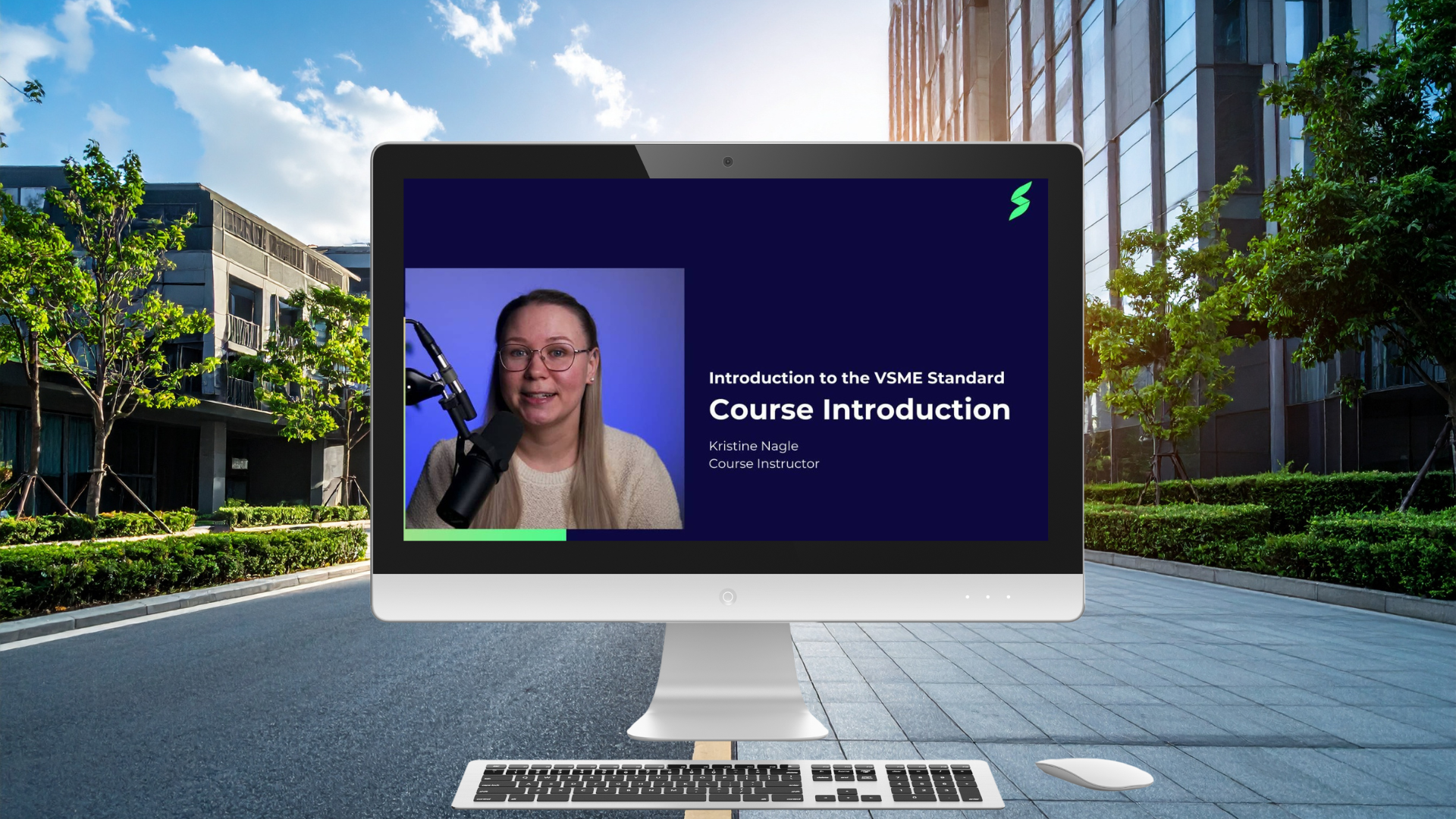
Course Outline
Lesson 1: Introduction to Sustainability Reporting - Why sustainability reporting matters for SMEs.
Lesson 2: What is the VSME Standard? - An overview of the Voluntary Sustainability Reporting Standard for SMEs.
Lesson 3: Objectives of the VSME Standard - Understanding its purpose and design.
Lesson 4: Scope of the VSME Standard - Who it applies to and how it is intended to be used.
Lesson 5: Structure of the VSME Standard - How the framework is organised.
Lesson 6: VSME Disclosure Requirements - Understanding different disclosure components.
Lesson 7: Presenting Sustainability Information - Principles for preparing and presenting structured information.
Lesson 8: Preparing to Report Using the VSME Standard - Practical steps to begin the reporting journey.
Lesson 9: The Business Case for VSME Reporting - Strategic benefits for SMEs, beyond compliance.
Practical: VSME Report - Case Study Review - Analyse a real-world example of VSME reporting in practice.
Designed for SMEs and Advisors Supporting Them

SME Leadership and Decision-Makers
◆ SME founders and business owners
◆ Startup and scale-up leaders
Internal Sustainability and Operational Professionals
◆ Sustainability managers in SMEs
◆ Finance and operations professionals

Advisors and Capital Partners
◆ Consultants advising SMEs
◆ Venture capital and investment professionals working with SMEs
Learn from an SME Sustainability Practitioner
Kristine is a sustainability advisor with five years of consulting experience supporting organisations across the European ecosystem, including:
◆ SMEs and startups
◆ Corporations
◆ Venture Capital funds across Europe
She previously developed and launched a CSR strategy for Printful, a global unicorn company with more than 1,600 employees across Europe and the United States.
Her background also includes managing accelerator programmes at Startup Wise Guys and serving as CEO of the TechChill conference, giving her deep insight into the startup and SME ecosystem.
Kristine brings practical, hands-on expertise in how sustainability strategy and reporting work in real SME environments.

Kristine Nagle
Founder and Sustainability Advisor,
Your Impact House
Sustainability Reporting is Reaching SMEs
As larger companies expand their sustainability reporting, SMEs are increasingly asked to provide reliable ESG information as part of supply chain requirements.
Understanding the VSME Standard helps SMEs:

Respond to Growing Supply Chain Expectations
◆ Respond confidently to sustainability questionnaires
◆ Structure information in a consistent way
◆ Demonstrate transparency to partners and investors

Build Long-Term Credibility and Readiness
◆ Strengthen credibility and competitiveness
◆ Prepare for future regulatory developments
Enrolment Options
Course Only
€95
12 months access to:
- Introduction to the VSME Standard course
- Certificate of Completion
- 1 CPD credit
- Downloadable resources and study materials
Professional Access
€795
12 months access to:
- All Sustainability Reporting Institute courses
- All Sustainability Reporting Institute masterclasses
- All Sustainability Reporting Institute certification pathways
- Expert-led sessions and interactive workshops
- In-depth learning tools, resources and advanced templates
- 60+ CPD credits
- Recognition and career-enhancing credentials
VSME Standard Course: Frequently Asked Questions
Common questions about our VSME Standard course from access details to completion certificates and progression.
How long does the course take?
Approximately 1 hour.
Is this course technical?
No. It is designed as a starting point.
Does the course include a practical example?
Yes, you will review a real-world VSME report case study.
Do I need prior sustainability reporting knowledge?
No. It is designed as a starting point.
Will this help me understand how to respond to ESG questionnaires from larger customers?
Yes. The course explains how sustainability information is typically requested and how the VSME Standard can be used to structure your response in a clear and proportionate way.
Is this relevant if my SME is not legally required to report?
Yes. The VSME Standard is voluntary, however many SMEs are indirectly required to provide sustainability data through supply chains or investor requests.
Start Your SME Sustainability Reporting Journey
Understand the VSME Standard, its objectives, and how to prepare your business to report, clearly and proportionately.
Enrol Today