
Understanding CBAM
A clear, practical introduction to the Carbon Border Adjustment Mechanism (CBAM), explaining how it works, which sectors are affected, and what companies trading within the EU must do to prepare.
Enrolment Options
Trading within the EU? CBAM Changes the Rules
The Carbon Border Adjustment Mechanism is reshaping how carbon costs are applied to imported goods in the EU.
What Businesses Need to Understand
◆ What CBAM is and why it was introduced
◆ How CBAM interacts with the EU Emissions Trading System (EU ETS)
◆ Which sectors and goods are covered
◆ What the reporting and compliance obligations are
◆ How CBAM certificates work and how they’re priced
◆ How CBAM will impact costs, supply chains, and competitiveness
What’s at Stake
Without a clear understanding, companies risk:
◆ Compliance gaps
◆ Unexpected costs
◆ Supply chain disruption
◆ Strategic and competitive disadvantage in the EU market
Learning Outcomes
After this course, you will be able to:

Explain CBAM's Purpose and Context
◆ Understand the risk of carbon leakage and the EU’s policy response
◆ Describe CBAM’s timeline, phases, and scope

Navigate CBAM in Practice
◆ Explain how CBAM operates in practice
◆ Understand certificates, carbon pricing, and compliance responsibilities

Apply Strategic Insights
◆ Assess business implications and global trade impacts
◆ Identify strategies to turn compliance into competitive advantage
Course Structure
Format
9 focused lessons
1 hour total completion time
Real-world business examples
Additional CBAM resources
1 CPD credit
Access through Professional Membership
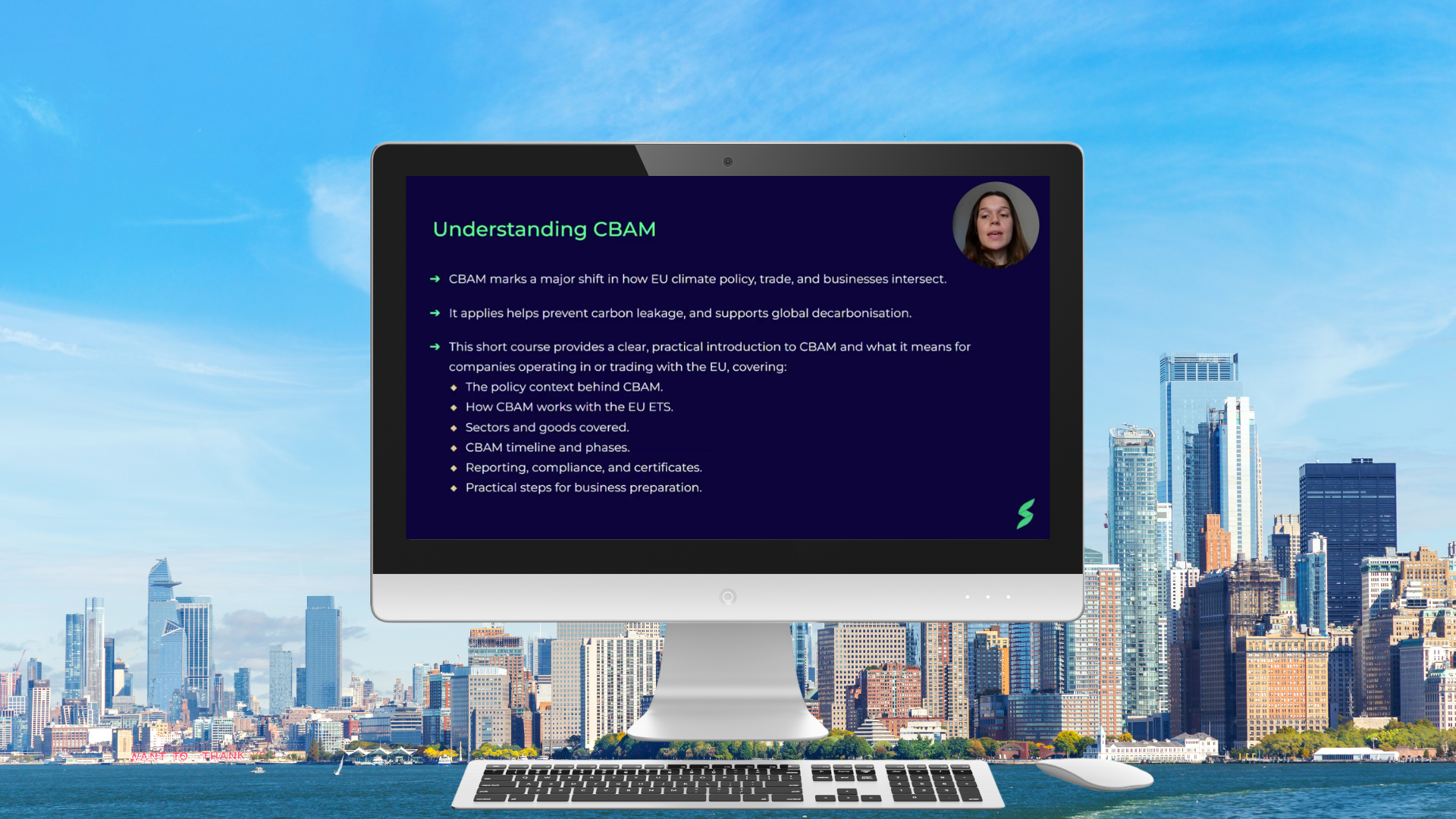
Course Outline
Lesson 1: Introduction to CBAM - What CBAM is and why it matters.
Lesson 2: The Climate Policy Context - How CBAM fits within the EU’s broader climate strategy and the EU ETS.
Lesson 3: CBAM Timeline and Phases - Understanding the transitional phase and full implementation.
Lesson 4: Sectors and Goods Covered - Which industries and products are currently in scope.
Lesson 5: How CBAM Works: The Mechanics - How emissions are calculated and reported for imports.
Lesson 6: CBAM Certificates and Carbon Costs - How certificates function and how pricing is determined.
Lesson 7: Compliance Responsibilities for Companies - Reporting obligations, verification, and governance considerations.
Lesson 8: Implications for Businesses and Supply Chains - Cost impacts, sourcing decisions, and competitiveness.
Lesson 9: Looking Ahead: Challenges and Global Impact - Future developments and international trade implications.
Additional Resources: Curated materials to support further understanding and practical preparation.
Designed for Professionals Navigating EU Trade and Climate Regulation

Finance and Compliance
◆ Finance and compliance professionals
◆ Legal and regulatory teams

Sustainability and ESG
◆ Sustainability and ESG managers
◆ Advisors supporting EU-facing businesses

Operations and Trade
◆ Supply chain and procurement leaders
◆ Trade and customs specialists
Learn from a Certified CBAM Specialist
Margarida Meleiro is certified by the International Association for CBAM (IACBAM) and regularly provides:
◆ CBAM training
◆ Reporting services
◆ Compliance guidance
◆ Strategic advisory support
Margarida works directly with companies that must comply with CBAM, offering practical, up-to-date insights into how the mechanism operates in real business contexts.

Margarida Meleiro
CBAM Consultant and Lead Expert, Carbon Complete
CBAM is Already Reshaping EU Trading

CBAM in Practice: What’s Changing
CBAM is being phased in and will expand over time. For affected sectors, this means:
◆ New reporting requirements
◆ Carbon-linked import costs
◆ Increased scrutiny of supply chain emissions
◆ Strategic sourcing implications

Why Early Understanding Matters
Companies that act early can:
◆ Avoid compliance risks
◆ Prepare operationally
◆ Manage financial exposure
◆ Turn regulatory awareness into a competitive advantage
Enrolment Options
Course Only
€95
12 months access to:
- Understanding CBAM course
- Certificate of Completion
- 1 CPD credit
- Downloadable resources and study materials
Professional Access
€795
12 months access to:
- All Sustainability Reporting Institute courses
- All Sustainability Reporting Institute masterclasses
- All Sustainability Reporting Institute certification pathways
- Expert-led sessions and interactive workshops
- In-depth learning tools, resources and advanced templates
- 60+ CPD credits
- Recognition and career-enhancing credentials
CBAM Course: Frequently Asked Questions
Common questions about our CBAM course from access details to completion certificates and progression.
How long does the course take?
Approximately 1 hour.
Does this course explain how CBAM certificates work?
Yes, including how pricing mechanisms are calculated and further business implications.
How many CPD credits does it provide?
1 CPD credit.
Is this relevant if my company is outside the EU?
Yes. If you export to or trade with countries within the EU in covered sectors, CBAM may apply.
Who should take this course?
Professionals in finance, compliance, sustainability, supply chain, trade, or advisory roles connected to EU trade.
Will CBAM expand to other sectors?
The course discusses the timeline, phases, and potential future developments.
Stay Ahead of EU Carbon Trade Regulation
Understand how CBAM works, and what your business must do to comply.
Enrol Today